
 |
 |
Lubbock is in the northern part of Zone 7. Plants must be able to withstand sustained temperatures of 0 degrees to be considered hardy in the Lubbock area. However, soil, moisture, humidity, heat, wind, and other conditions also affect the viability of individual plants. In Lubbock, plants that are “hardy to Zone 7” but might not thrive due to the summer heat.
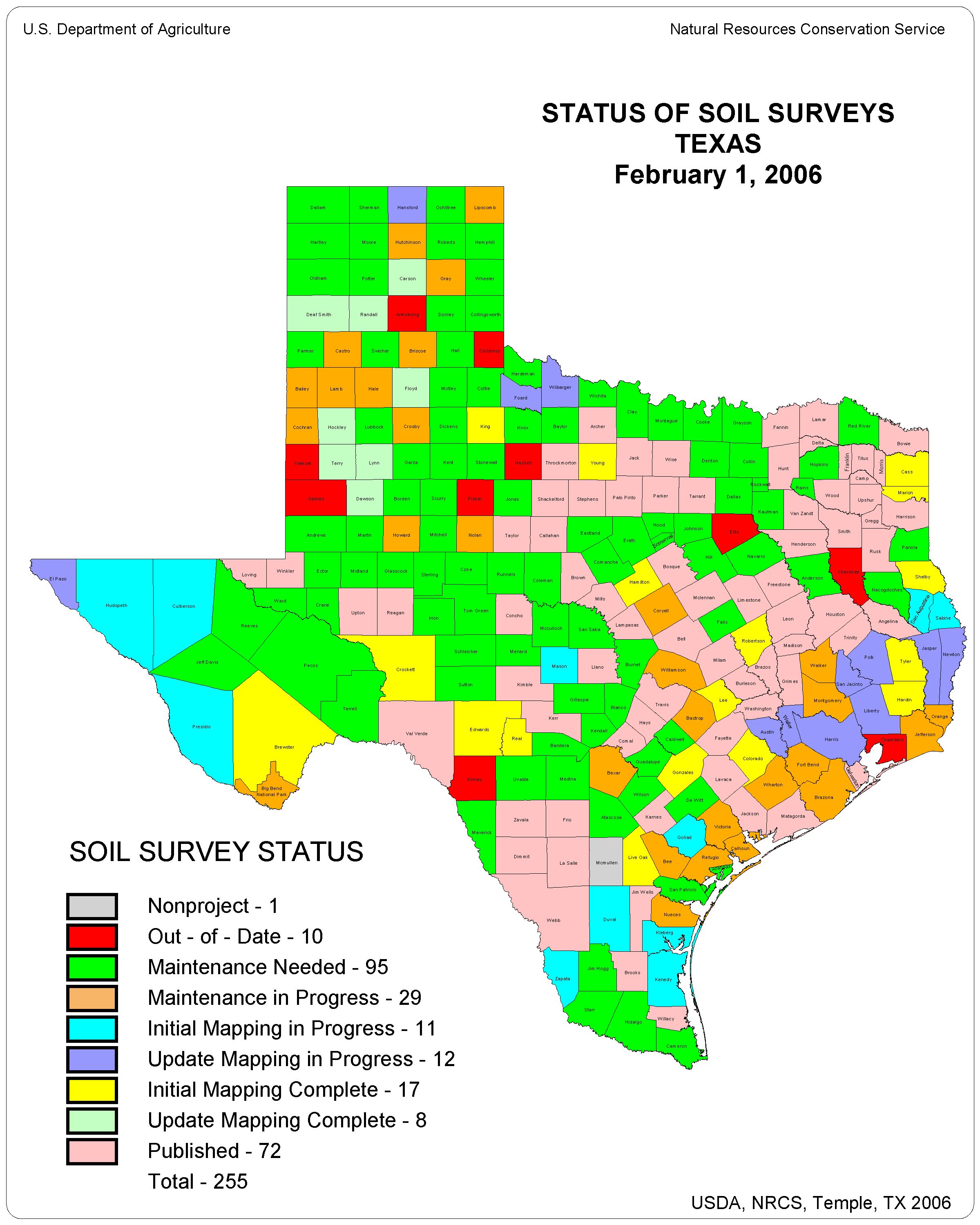
 There are several sources of information on the soils in Texas. The place to start is the USDA-Natural Resources Conservation Service (formerly the Soil Conservation Service). They publish “soil surveys” for each county, in cooperation with state agencies. Check here for the status of soil surveys in Texas (you can also see it in map form). There are also soils data for GIS applications, found in the Soil Survey Geographic (SSURGO) Database, from the USDA-NRCS. Click here for a map showing the certification schedule of SSURGO data in Texas. If interested in SSURGO data, please go to the National SSURGO Database. You can also find specific information on Texas soils in the Texas Soil Characterization Database, compiled by Texas A&M University’s Soil & Crop Science Department. Maps and analytical information for over 100 soils can be found on the Soil Characterization Laboratory’s web page.

More resources:
On the United States Environmental Protection Agency (EPA) ecoregion map, Lubbock is part of the High Plains ecoregion — more specifically the Southern High Plains section of that region. This means the landscape around Lubbock is naturally a flat, high-elevation prairie with a semi-arid climate and soils influenced by the Llano Estacado ecosystem. Knowing this helps you understand the natural climate, rainfall patterns, soil types, and native vegetation you’re dealing with, which is key for choosing plants that will thrive there. You can explore the EPA’s official ecoregion maps and downloadable PDFs for Texas on EPA.gov here: EPA Ecoregion Maps & Downloads (Level III & IV for Texas).